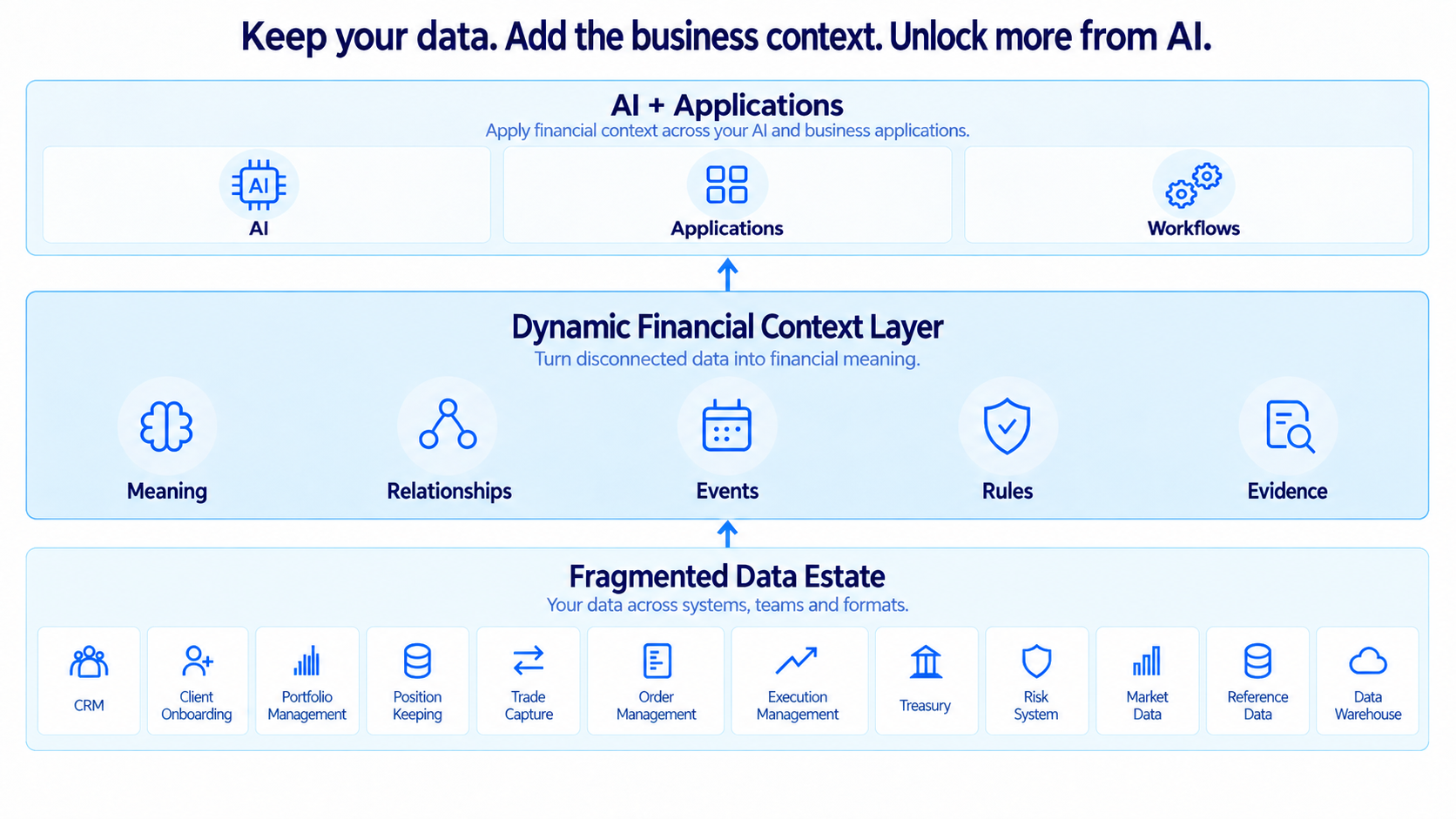
Specialist Data & AI services for financial institutions
From understanding your existing data landscape and exploring AI opportunities to building and operationalising focused business capabilities.
5-Day AI & Context Discovery
Understand your business requirements, data landscape and existing systems, identify context gaps, and explore practical business and AI opportunities.
Learn more →Focused Implementation
Turn a focused business opportunity into a working capability, accelerated by the Finsight AI-Foundry framework and reusable solution accelerators.
Learn more →Forward-Deployed Engineering & Advisory
Bring specialist financial data, context, Palantir and AI expertise directly into your architecture and delivery team.
Learn more →Finsight AI-Foundry
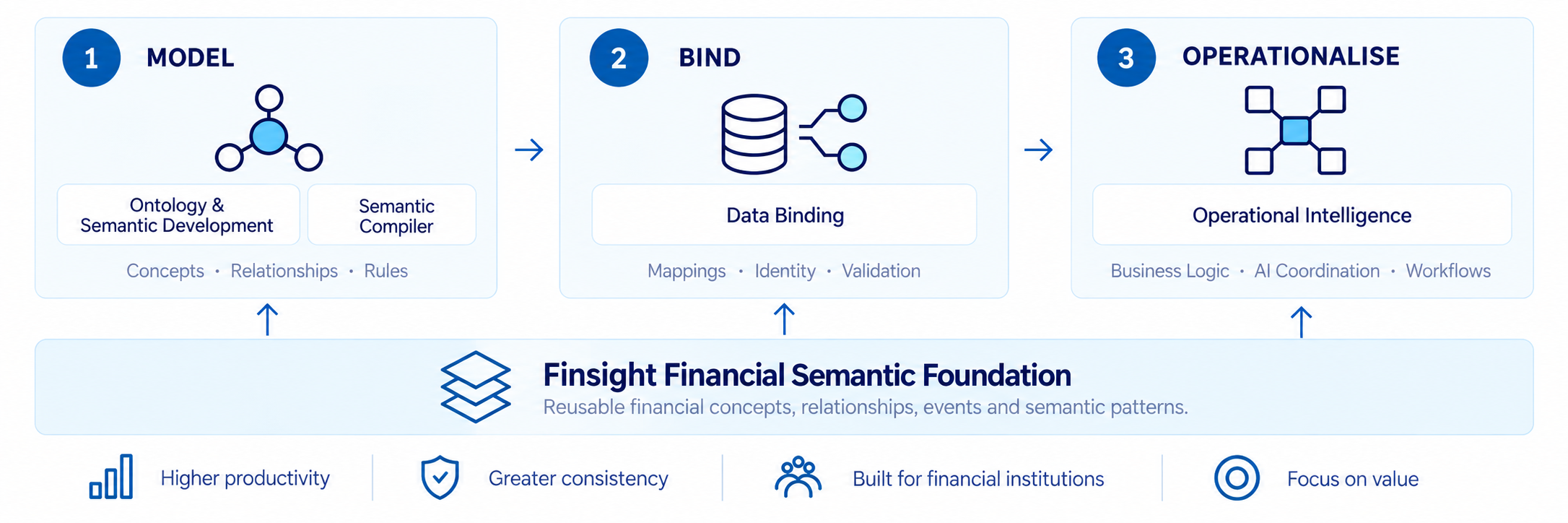
A reusable engineering framework for developing, connecting and operationalising financial context for AI.
Client Opportunity Intelligence
Finsight's flagship solution accelerator for capital-markets client coverage, demonstrating how connected financial context can reveal client opportunities hidden across fragmented systems.
Acquire
Identify new client and relationship opportunities. Connect fragmented client and market signals to surface prospects that existing workflows miss.
Grow
Find ways to deepen existing client relationships. See where connected portfolio, transaction and usage context points to expansion.
Advise
Surface timely advisory opportunities. Turn isolated events into evidence-backed reasons to engage the client.
Fund
Identify financing and liquidity needs. Bring funding, maturity and cash-flow information together before the client raises them.
Protect
Identify risk, hedging and protection requirements. Connect exposures with client situations to anticipate the conversations that matter.
Economic
Respond to market and economic change. Understand which clients and portfolios are actually affected by an event.
The opportunity may already exist in the data. What is missing is the context that connects it.
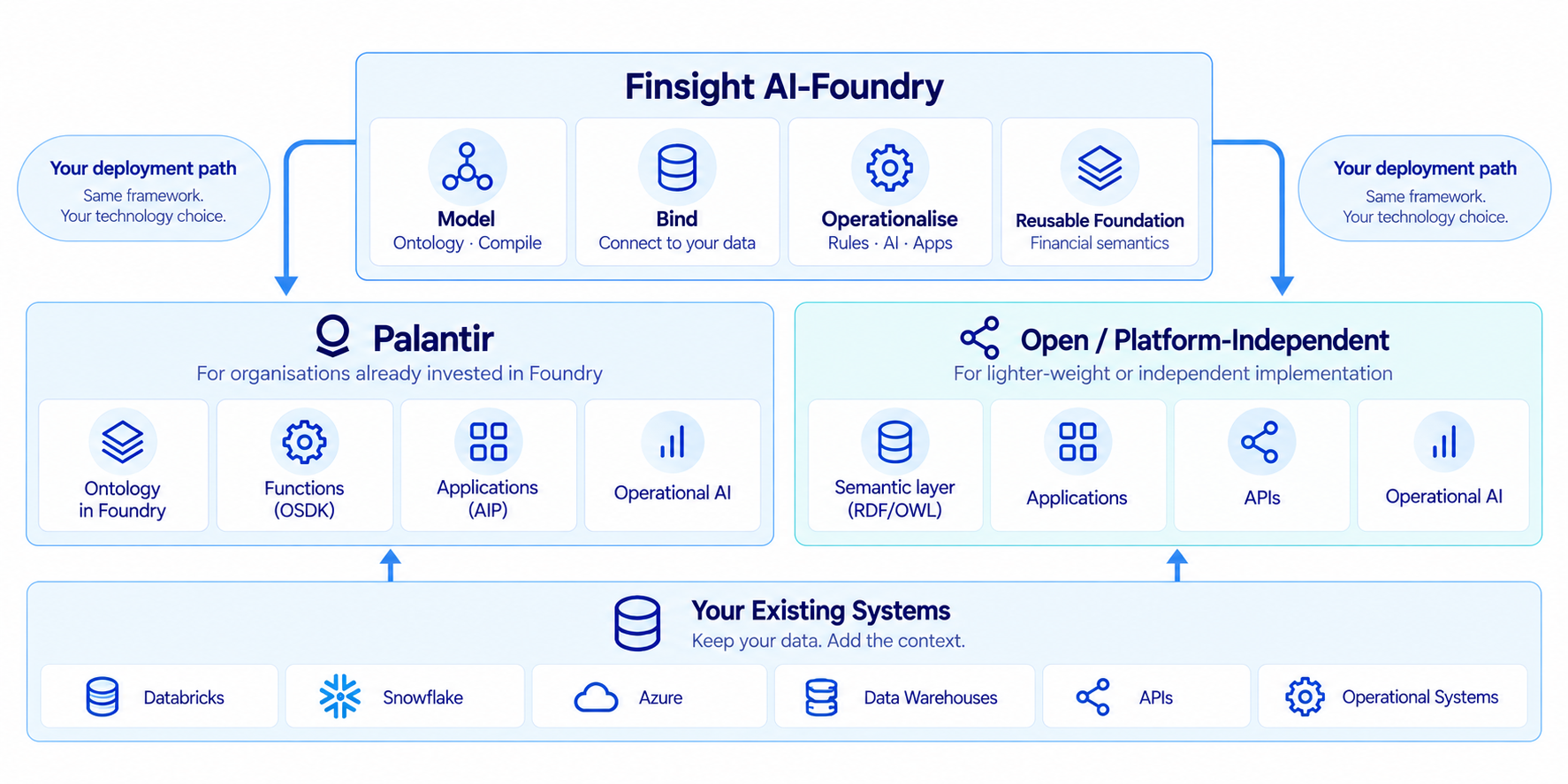
Work with the systems you already have
Finsight adds the financial context layer around your existing data and technology — with deployment options for Palantir or open, platform-independent environments.